A few weeks ago, a patient came into the practice telling me her fingers tingled every time she typed for more than twenty minutes straight. She works on the computer all day and answers emails on her phone during breaks. No diagnosed injury, no abnormal test results. What she had was built-up tension in the forearm, pressing on the nerves in the area and causing that uncomfortable tingling.
After one session working the forearm and wrist muscles, the tingling eased significantly. But the relief from a single session doesn’t fix the habit that caused the problem — and that’s what I want to talk about here.
Hand and wrist pain from phone and computer use is a complaint that grows every year at my practice in Campo Comprido, Curitiba. I see people from Água Verde, Santa Felicidade, Mossunguê and Cidade Industrial with the same story: it started as a mild discomfort and slowly became constant. If you recognize this pattern in your own routine, this post is here to explain why it happens and what you can do before it becomes a bigger problem.
Why hand and wrist pain is becoming so common
The rise in cases tracks the rise in screen time. We spend hours holding the phone in fixed positions and typing on keyboards without breaks, and the small muscles of the hands and forearms weren’t built to sustain that kind of continuous repetition without rest.
Unlike back or neck pain, which usually comes from structural bad posture, hand pain is generally the result of micro-repetition: the same movement, hundreds of times, with no interval. Holding the phone while your thumb scrolls the screen, typing with your wrists resting on a hard surface, using the mouse without support — it all adds up to tension the body accumulates silently, until the day it speaks up through pain, stiffness, or tingling.
What makes it worse is that most people ignore the early signs because “it’s just hand fatigue.” And they keep using the phone and computer the same way, day after day.
What happens in your forearm when you type or scroll all day
The muscles that move your fingers aren’t in your hands — they’re in your forearm. A set of long tendons runs through the wrist and connects to each finger, and it’s that forearm musculature that carries the load of typing, holding the phone, or repeatedly clicking the mouse.
When that muscle group works for hours without a break, it becomes chronically contracted. The contraction reduces local circulation and can compress nearby nerve structures, like the median nerve at the wrist — the same one involved in carpal tunnel syndrome. This mechanism usually explains the tingling in the fingers, the “numb hand” feeling on waking up, or pain that travels from the wrist up to the elbow.
The good news is that, in most cases that come to the practice before becoming chronic, the problem is muscular and myofascial — and it responds well to hands-on work. Myofascial release works directly on those forearm tension points, releasing the built-up contraction and easing the pressure on the nerves in the area.
Muscle tension vs. RSI: when to pay closer attention
Muscle tension from repetitive use is reversible with breaks, habit changes, and hands-on work. RSI (Repetitive Strain Injury), on the other hand, is a more advanced clinical condition that requires medical diagnosis and specific follow-up — massage therapy comes in as support, not as a standalone treatment.
A few signs help tell them apart. Muscle tension tends to ease with rest over the weekend and gradually return during the work week. A condition progressing toward RSI tends to persist even with rest, and can come with loss of strength, visible swelling in the area, or pain that disrupts sleep.
If you’re in the phase where the discomfort comes and goes, that’s the ideal time to act — before the tension turns into something more serious. If you already have a medical RSI diagnosis, the path is to seek medical guidance and, with clearance, add massage therapy as part of your care, never as a replacement.
How massage therapy treats hand and wrist tension
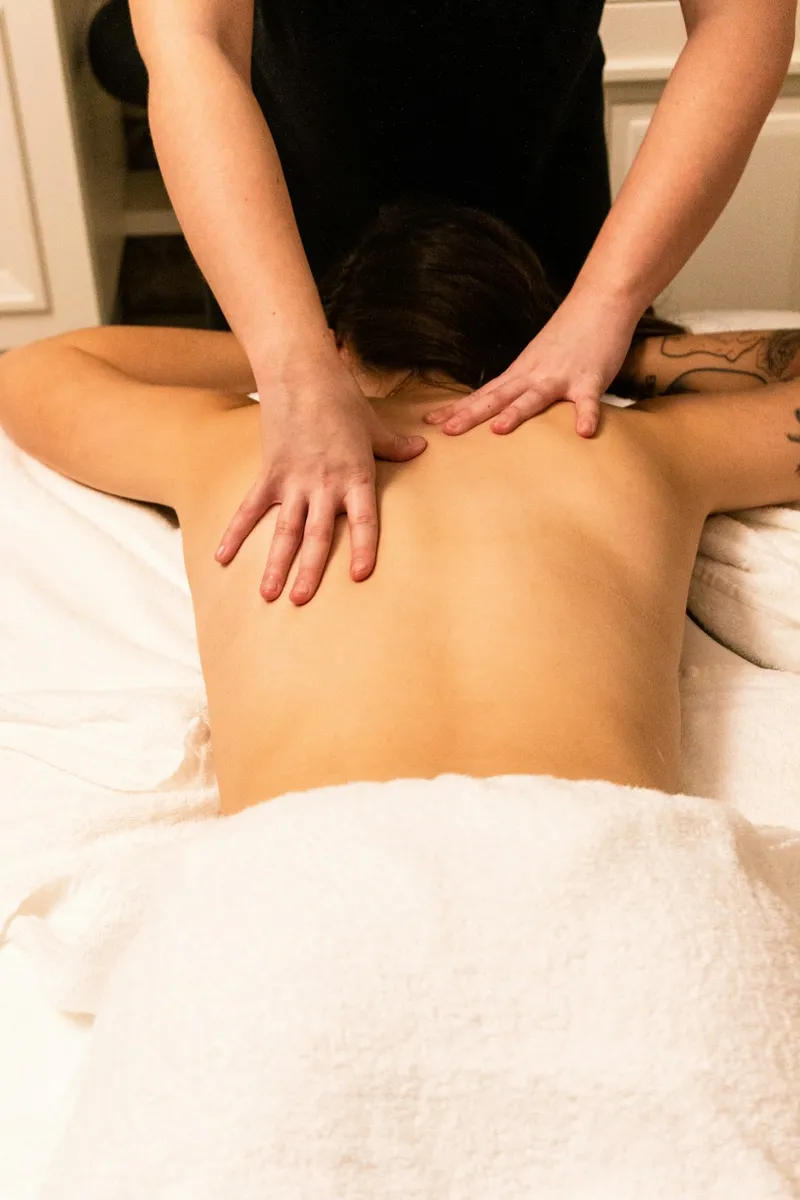
The hands-on work focuses on relieving the muscle contraction in the forearm and hand before it progresses into persistent nerve compression. I combine myofascial release on the tension points with relaxing massage around them, preparing the muscle and improving circulation in the area.
Since the muscles that support the fingers and wrist sit in the forearm, the work isn’t limited to the hand itself — the whole chain needs to be released, from the elbow to the fingers. Forearm tension is often linked to shoulder and neck tension, because the body compensates for one restriction by creating another down the chain. That’s why the assessment usually looks at the whole arm, not just the spot where it hurts.
Relaxing massage plays an important role in this process: it lowers overall muscle tone and helps the body “let go” before the more targeted myofascial release work. Combining both techniques usually brings noticeable relief within the first sessions in cases that haven’t progressed to something more serious yet.
Quick checklist for anyone using their phone and computer all day
A few simple adjustments significantly reduce the load on your hands and wrists:
- Use a phone stand instead of holding the weight in your hand for long periods
- On the computer, keep your wrists straight, without resting them on hard surfaces while typing
- Use wrist support on the keyboard and mouse if you notice frequent tension
- Take 1–2 minute breaks every 30 minutes of typing, opening and closing your hands
- Switch which hand you use to scroll your phone
- Avoid sleeping with your wrist bent under your body or your pillow
None of these habits fix tension that’s already set in, but together they keep it from getting worse — and they help sustain the results of hands-on work between sessions.
When to seek professional help
Most people wait for the tingling to become constant before seeking treatment. But just like with other muscle tension, the longer a condition persists, the more layers of compensation the body builds — and the harder they are to reverse.
A few signs it’s worth booking an assessment:
- Frequent tingling in the fingers
- Wrist or forearm pain that doesn’t ease with rest
- Stiffness in the hand on waking up
- Difficulty gripping objects or making a fist with strength
- Pain that travels from the wrist toward the elbow or shoulder
None of these signs automatically point to something severe. Most of the time, they point to built-up muscle tension that responds well to massage therapy when treated early. The point is not to let the pain become routine.
How sessions work at the practice
Before any technique, I talk with you about your phone and computer habits, where the pain shows up, and how long it’s been going on. That helps us figure out whether it’s recent muscle tension or something that already needs parallel medical evaluation.
The work is always personalized: every usage pattern creates a different kind of overload, and the protocol adapts accordingly. The practice is in Campo Comprido, Curitiba, open Monday through Friday, 9am to 7pm.
Frequently asked questions
Is hand pain from phone use normal? It’s common, but it shouldn’t be ignored. The pain shows up because the muscles in the forearm and hand stay contracted for hours without a break. It’s not “normal” in the sense of something you have to accept — it’s a sign of overload that responds well to treatment when addressed early.
How many massage therapy sessions are needed for wrist pain? It depends on how long the tension has been building. Recent cases tend to improve within the first few sessions, like what happened with the patient I mentioned at the start. Tension that’s months old, or cases already diagnosed with RSI, need longer follow-up and, often, joint work with a doctor or physical therapist.
Does massage replace medical treatment for RSI? No. Massage therapy helps relieve the muscular and myofascial tension that often accompanies these conditions, but it doesn’t replace diagnosis, tests, or medical treatment. If you already have an RSI diagnosis, the best path is to treat it alongside your doctor.
Where can I find a massage therapist for hand pain in Curitiba? I see clients in Campo Comprido, Curitiba (PR), and welcome plenty of people from nearby neighborhoods like Água Verde, Santa Felicidade, Mossunguê and Cidade Industrial. Booking is done via WhatsApp.
If hand or wrist pain is already getting in the way of your daily routine, message me on WhatsApp before booking. I’d rather understand your phone and computer habits first, to know whether massage therapy is the right path for your case.