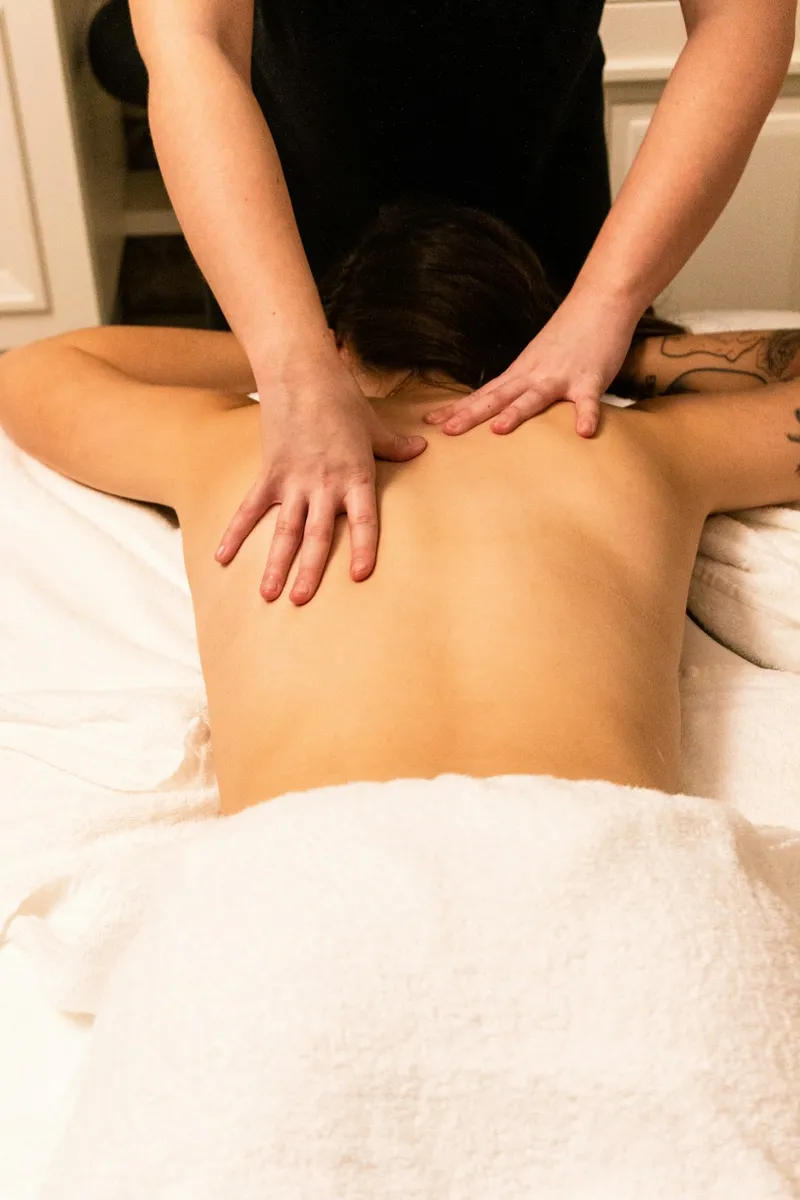
A few weeks ago, a man in his early thirties came into my practice with his right shoulder locked up. The pain was so intense he couldn’t lower his arm, and he’d been unable to lift weights at the gym for a while because of it.
After one session combining relaxing massage and full-body myofascial release, he left with his movement back.
It’s not an isolated case. Complaints of muscle pain building up over daily life are showing up more and more at my practice in Campo Comprido, Curitiba, and remote work is one of the main triggers. A locked shoulder, lower back pain that won’t quit, a stiff neck by the end of the day. Different symptoms with one thing in common: the body wasn’t built to stay still for hours, and the home workspace almost never gives it the support it needs.
I see a lot of people from around here — Campo Comprido, Água Verde, Santa Felicidade, Cidade Industrial, Mossunguê — who work from home and arrive with the same story: the pain grew slowly, and one day it locked up.
If you recognize any of this in your own body, this post is for you.
Why remote work hurts more than working in an office
It sounds contradictory. You’re at home, at your own pace, no commute. Your body should be more rested.
The problem isn’t the effort. It’s prolonged stillness combined with poor positioning.
At the office, you’d get up to go to the bathroom, grab a coffee, walk over to a coworker’s desk. Working from home, a lot of people go 4 or 5 hours without leaving the chair. And when the chair isn’t ergonomic — or worse, when work happens on the couch, in bed, or at the dinner table — the muscles sit under constant tension with no chance to recover.
Over time, what was muscle tension turns into chronic contraction. Chronic contraction compresses nerves, restricts circulation, and limits range of motion. That’s how a shoulder locks up.
Right shoulder pain: what’s happening inside the muscle
The right shoulder is, by far, the number one complaint among people who spend the day at the computer. The reason is simple: the arm stretches forward to reach the mouse, the shoulder rises a few millimeters to hold that position, and it stays that way for hours, every day.
That tiny movement, one you barely notice, keeps the upper trapezius and rotator cuff engaged the whole time. Without a break, they get tired. After a few weeks of repetition, myofascial tension points start forming — those hardened knots inside the muscle that don’t release on their own.
What shows up: localized shoulder pain, pain radiating into the neck, limited movement, and in more advanced cases, an inability to lower or rotate the arm. That’s exactly what happened with the patient I mentioned.
Myofascial release works directly on those tension points, releasing the knot and restoring circulation in the area. Combined with relaxing massage, which prepares the muscle to receive deeper work, the result is a progressive release the muscle couldn’t reach on its own. That’s the mechanism that gave the movement back in one session: the muscle was locked, not injured. With the right technique, it let go.
Lower back pain: the enemy of anyone sitting all day
The lower back is the second biggest complaint among people working from home. And it’s the most underestimated one, because it starts slowly.
When you sit, the hip flexors — mainly the psoas muscle — sit in a shortened position. If the chair doesn’t offer proper lower-back support, the spine loses its natural curve and starts working off-axis. Hours in that position tighten the paravertebral muscles and overload the intervertebral discs.
The most common symptom: pain that gets worse by the end of the day, a heavy feeling in the lower back, difficulty standing up straight right after sitting for a while.
Massage relieves the tension and improves circulation in the area, and in some cases of a locked-up lower back, cupping therapy helps decongest the deeper musculature. But hands-on work needs to go hand in hand with active breaks. Standing up and walking for 5 minutes every hour already changes the pattern. You can’t treat something chronic on the table alone without changing the habit that caused the pain.
Neck tension and headaches: the problem with a low monitor
Your head weighs about 5 kg (11 lb) when it sits neutrally on top of the spine. The problem is that for every centimeter it tilts forward or down toward the screen, the weight your neck muscles have to hold skyrockets. It’s not proportional — it’s much worse.
Anyone working on a laptop without a stand tilts their head down all day. Anyone answering messages on their phone at the table does the same. What builds up: chronic tension in the sternocleidomastoid, scalene, and trapezius muscles, which often shows up as tension headaches at the temples and the back of the head.
The mechanical fix is simple: monitor at eye level, laptop on a stand with an external keyboard. But if the tension is already there, it takes hands-on work to undo what’s built up.
Quick checklist for a home office setup that won’t hurt you
Save this and check it against your own setup:
- Monitor at eye level (the top edge of the screen at eyebrow height)
- Elbows at 90°, supported, shoulders relaxed (not raised toward the mouse)
- Feet flat on the floor or on a footrest, knees at a right angle
- Lower-back support on the chair (a cushion works if the chair doesn’t have one)
- Screen an arm’s length from your eyes
- A 5-minute break every hour: stand up, walk, loosen the neck
None of these items cost much, and together they take away a big chunk of the load that turns into pain by late afternoon.
What massage therapy fixes that stretching doesn’t
Stretching matters. But it works on muscle extensibility, not on deep myofascial tension.
A myofascial trigger point — that hardened knot that forms after weeks of overload — doesn’t go away with stretching. It needs sustained, targeted pressure on the point, a technique in massage therapy called myofascial release or ischemic compression.
Stretching brings temporary relief: the muscle returns to tension hours later. Myofascial release undoes the knot, and the relief lasts longer because the structural problem was treated, not just eased.
That’s why the patient with the locked shoulder didn’t improve with the stretches he tried at home. The muscle was contracted past the point stretching alone can reach.
When to see a massage therapist (and not wait for it to get worse)
Most people wait until the pain becomes limiting before seeking help. But the longer muscle tension persists, the harder it is to reverse — and the greater the risk of compensation in other parts of the body. Someone who locks up a shoulder starts overloading the neck; someone who strains their lower back starts feeling it in the hip.
A few signs it’s time to book a session:
- Pain that returns every day in the same spot
- Stiffness on waking up that takes a while to fade
- Difficulty turning your neck or fully raising your arm
- Frequent headaches starting at the back of the head
- Tingling in the arm or hand
These signs don’t necessarily point to an injury. Most of the time, they point to built-up muscle tension that responds well to massage therapy. But ignoring them is the fastest path to a locked shoulder.
How sessions work at my practice
Before any technique, I talk with you. I want to understand where it hurts, what your work routine looks like, how long the pain has been there, and what you’ve already tried.
Every body and every case is different. A shoulder locked up by myofascial tension responds to a different protocol than a lower back overloaded by poor posture. Sessions are personalized — no generic formula.
The practice is in Campo Comprido, Curitiba, open Monday through Friday, 9am to 7pm. I see a lot of people who come right after work, so late afternoon tends to be the most requested time.
Frequently asked questions
How many sessions do I need for shoulder pain to go away? It depends on how long the tension has been building. Recent cases, just a few weeks old, tend to respond well after the very first session, like the patient I mentioned. Tension that’s built up over months usually needs a few sessions to fully release. I give you a real estimate after an assessment, without pushing a package.
Does massage for remote-work pain hurt? Myofascial release works under firm pressure on tension points, so it’s normal to feel a discomfort “that eases” — that good kind of ache when someone hits the right spot. I adjust the intensity to your limit the whole time. It doesn’t need to hurt to work.
Where can I find a massage therapist for postural pain in Curitiba? I see clients in Campo Comprido, Curitiba (PR), and welcome plenty of people from nearby neighborhoods like Água Verde, Santa Felicidade, Mossunguê and Cidade Industrial. Booking is done via WhatsApp.
Can massage fix pain from sitting all day for work? It resolves the muscular side (tension, myofascial knots, restricted circulation) that’s behind most remote-work pain. But to keep it from coming back, it needs to be paired with ergonomic adjustments and breaks throughout the day. I address both sides with every patient.
If you’re feeling any of the pain described here and want to know whether massage therapy is the right path for you, message me on WhatsApp before booking. I’d rather talk through your situation than have you book without knowing if it’s the right fit.